
Research Awards and This Year's New Researchers
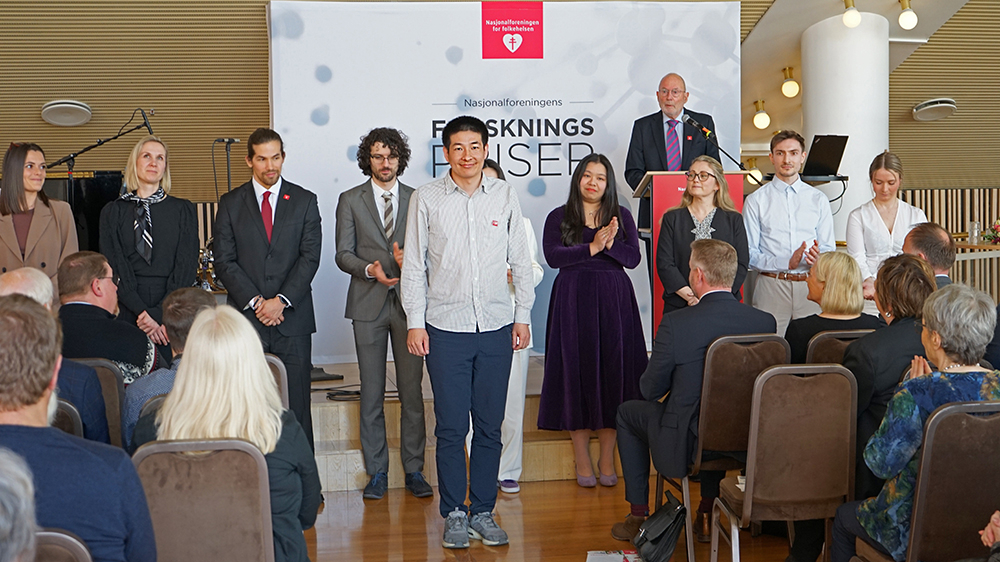
On April 1st, a formal ceremony was held for the National Association for Public Health's 2025 Research Awards at Oslo Nye Teater. The Heart Research Award was given to Sigrun Halvorsen, and the Dementia Research Award to Jens Pahnke. Chairman Dag S. Thelle introduced the promising young researchers who received scholarships for 2025. Among them is Yanjiao Li, who was awarded 3 million NOK for dementia research.
The Challenge of Dementia
Dementia affects over 55 million people globally, and the number is expected to increase significantly. In Norway alone, 101,000 people had dementia in 2020, and this figure is expected to rise to nearly 237,000 by 2050. Alzheimer's disease (AD) is the most common form of dementia, but there are currently no effective treatments.
Pioneering Project in Alzheimer's Research
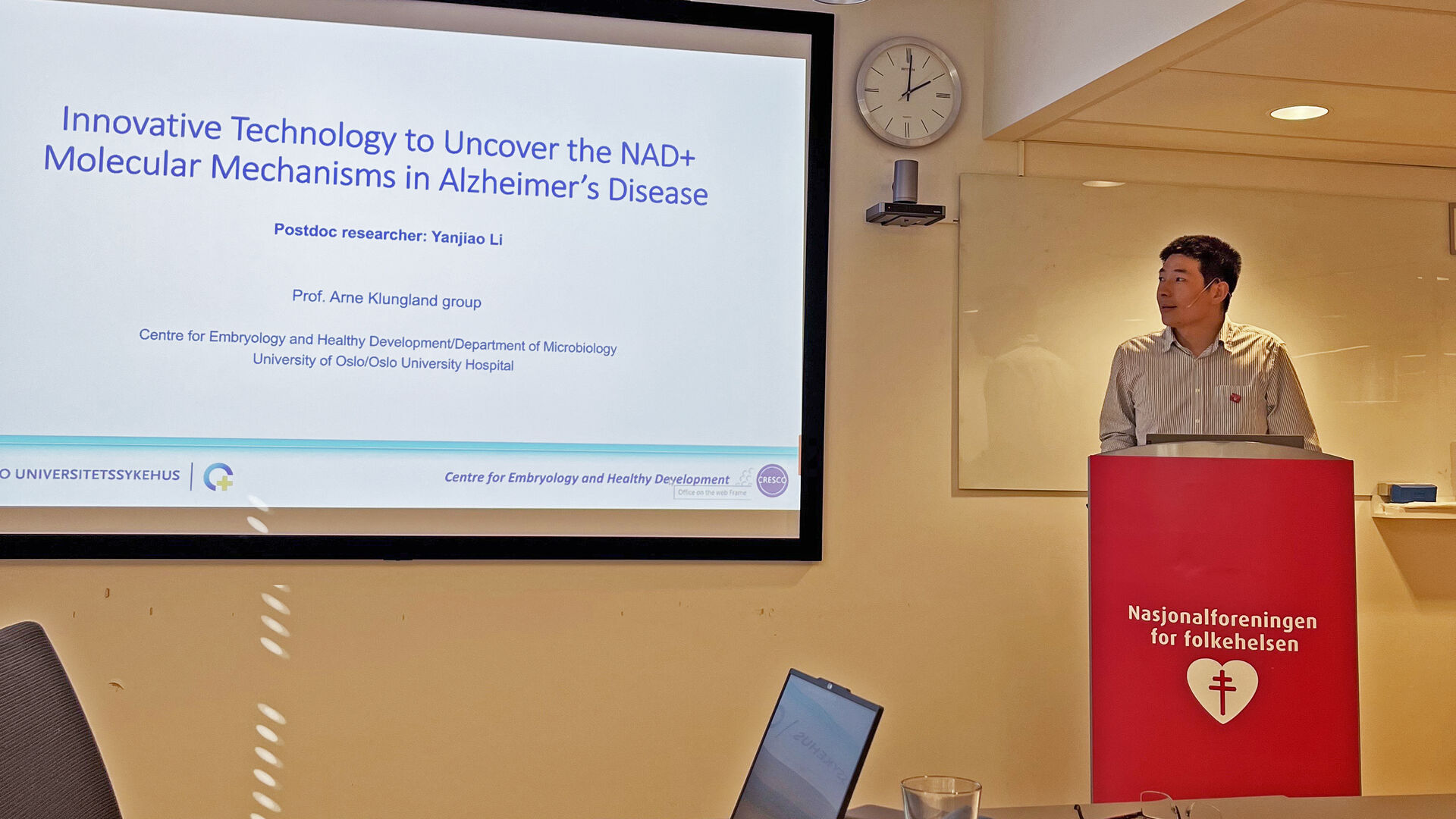
Yanjiao Li's research project explores an innovative approach to understanding AD by studying a molecule called NAD+, which is essential for brain health. As people age, the levels of NAD+ decrease, which may play a role in the development of AD. The project aims to uncover how this reduction affects a specific type of RNA (NAD-RNA) in the brain and how this may trigger AD.
Future Opportunities for Patients and Society
The team utilizes advanced technology to analyze brain tissue in hopes of finding new theraputic targets that might help slow down or halt Alzheimer's disease (AD). New insights could change our understanding of how the disease begins and progresses, leading to the development of new treatment methods.
Advancements in this research could improve the quality of life for many people living with dementia and alleviate the burden on families and society. This work offers hope for more effective treatments for Alzheimer's disease in the future.