
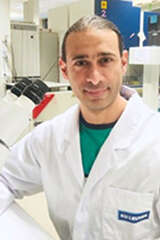
Sherif Khodeer, PhD, is a Postdoctoral Research Fellow at Pasque Laboratory of Cellular Reprogramming and Epigenetic Regulation, University of Leuven, Belgium.
Abstract
DNMT3L is the most highly enriched chromatin-associated factor in naive compared with primed human pluripotent stem cells (hPSCs), yet its developmental role as a catalytically inactive member of the DNA methyltransferase family in humans remains unclear.
Here, we combine gain- and loss-of-function approaches with single-cell multi-omics to delineate its mechanism of action. We show that DNMT3L is essential for the developmental competence of naive hPSCs and for proper lineage specification by orchestrating a multilayered epigenetic program. DNMT3L preserves global DNA methylation, shapes chromatin accessibility, and engages a hominoid-specific regulatory network centered on the evolutionarily young transposable element subfamily LTR5Hs.
Mechanistically, DNMT3L interacts with DNMT3A/B, TRIM28, and components of the NuRD complex and supports DNMT3A/B protein abundance. Its depletion causes widespread DNA hypomethylation, including at LTR5Hs loci, and increases genome-wide chromatin binding of multiple KRAB zinc-finger proteins (KRAB-ZNFs). Despite this hypomethylation, LTR5Hs elements remain transcriptionally silenced through increased H3K9me3 and reduced chromatin accessibility. Reintroduction of DNMT3L into DNMT3L-knockout naive hPSCs restores the transcriptome and DNA methylome to states comparable to those of their wild-type counterparts.
Moreover, ectopic DNMT3L expression promotes the primed-to-naive transition. Integrative single-cell analyses combining transcriptomics, chromatin accessibility, and DNA methylation in blastoids demonstrate that DNMT3L knockout cells are globally hypomethylated, fail to induce trophectoderm, and give rise to defective epiblast-like cells owing to impaired acquisition of lineage-appropriate chromatin accessibility at trophectoderm-associated and LTR5Hs loci.
Together, these findings identify DNMT3L as a master epigenetic coordinator that safeguards human naive pluripotency and early embryonic development by integrating DNA methylation, chromatin organization, and transposon regulation.