
Scientific focus of the Leidel Lab
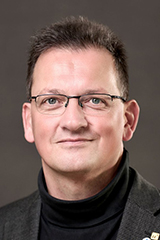
Sebastian Leidel is Professor for Cellular RNA Biochemistry at the University of Bern. Trained as a cell biologist he has moved into biochemistry. The focus of his work are RNA modifications and how they affect mRNA translation and RNA metabolism as a whole. The key questions the lab seeks to understand are:
- What are the in vivo roles of tRNA modifications?
- How are tRNA modifications regulated?
- How are tRNA modifications linked to cellular stress responses?
To address these questions, the Leidel lab uses different experimental models from bakers yeast to zebrafish. Furthermore, they apply quantitative high throughput methods like ribosome profiling and RNA mass spectrometry. It is the group’s philosophy that new biological insights can only be gained by applying and improving state-of-the-art methods.
In all of projects the lab combine rigorous biochemical, molecular biological, genetic, genomic, and computational approaches in various model organisms to understand how metabolism and mRNA translation interact with cellular biochemistry at multiple levels.
Background
Sebastian Leidel studied protestant theology at Siegen, Marburg, Jerusalem, and Heidelberg, and cell biology and molecular biology at Heidelberg University. After completing his master’s thesis at the University of Pennsylvania, he joined the lab of Pierre Gönczy at the Swiss Institute for Experimental Cancer Research for his Ph.D. There he studied the role of SAS proteins in centrosome duplication in C. elegans.
Being more and more attracted to biochemistry, he conducted postdoctoral work at the Institute of Biochemistry at ETH Zurich where he discovered that ubiquitin-related modifier 1 (Urm1) acts as a sulfur carrier during the modification of cytoplasmic tRNA in eukaryotes. In 2008 he became a lecturer at the Institute of Biochemistry at ETH Zurich before he started a Max Planck Research Group at the Max Planck Institute for Molecular Biomedicine in Münster in 2009. There he continued to work on tRNA modifications and cellular quality control.
He received an ERC starting grant in 2012 and was appointed Full Professor at the University of Bern in 2018. In 2019 he became an elected member of the Academia Europaea.